
English 
Dedicated to global electroacoustic technology.
Views: 0 Author: Site Editor Publish Time: 2026-11-11 Origin: Site


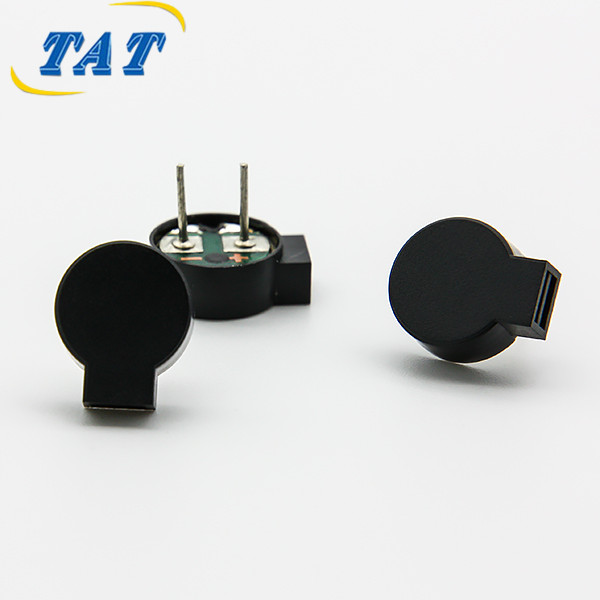
A buzzer that has run for years inside a wall-mounted control cabinet is not automatically a candidate for a dashboard. The part may be identical, the drive circuit may be identical, the tone may be identical, and yet the qualification route, the evidence pack and the dominant failure mode are not. When a buying team asks about buzzer for automotive vs industrial use, the real question underneath is which of two acceptance systems the part has to satisfy, and what that costs in money, lead time and paperwork.
The confusion is understandable, because both markets buy from the same families: passive magnetic buzzers, passive piezo elements, and active piezo sounders with a built-in oscillator. The difference sits above the component, in how each customer proves the part is fit for the place it will live.
An industrial buyer writes a specification and then holds the supplier to it. If a panel builder needs an audible alert that survives a hot enclosure, the specification says so, the supplier tests against it, and the purchase order references that test.
An automotive buyer works inside a qualification framework that already exists before the purchase order is written. The component must be qualified against a recognised stress-test regime, the supplier must be able to demonstrate process control behind the samples, and the buyer expects notification when anything about the part changes. Passing a test once is not the deliverable; remaining demonstrably the same part, made the same way, is.
AEC-Q200 is the stress-test qualification standard that the automotive industry uses for passive components, and it is cited so often in sourcing conversations that it is worth being precise about what it does and does not do. It does not stand alone: the industry maintains parallel families of test standards through bodies such as SAE International, and a qualification argument is normally assembled from several of them. The revision in force, not a summary of it, is what governs any specific claim.
The standard defines a battery of stress tests that a component family must survive, and it sorts components into temperature grades according to where in the vehicle they are expected to operate. A part intended for a passenger compartment and a part exposed to the outside world do not face the same grade, and a supplier who quotes "AEC-Q200 qualified" without naming the grade has told you almost nothing usable.
What the qualification buys the buyer is confidence in three things: that the part has been stressed beyond normal service in a defined and repeatable way, that the test conditions were documented rather than asserted, and that the same construction will keep being produced. What it does not buy is a guarantee about your specific application. A qualification is a floor, not a ceiling.
The qualification says nothing about whether the tone is pleasant, whether the sound pressure level at your listening distance clears the ambient noise of your product, or whether the diaphragm will behave the same way at the low end of your supply rail. Those remain application questions. This is the most common misunderstanding in the whole conversation: teams treat qualification as a substitute for evaluation, then discover at validation that a qualified part is acoustically wrong for the product.
For any claim you intend to rely on, read the standard revision in force at the time of your project and confirm the specific grade and test list with the supplier in writing.
Industrial sourcing inverts the burden. There is no single framework that a factory automation customer, a security panel maker and a medical device OEM all accept, so each writes its own requirement and the supplier answers it.
An industrial specification is usually assembled from the product's own operating envelope: the enclosure temperature the customer measures, the supply rail the customer regulates, the audible distance the customer cares about, and the service life the customer expects. That makes industrial requirements far more variable than automotive ones, and it makes the datasheet's operating window the primary negotiation surface rather than a secondary detail.
The most reliable way to see the difference between the two worlds is to put two parts side by side and read their temperature promises.
Almost every datasheet states two ranges, and buyers routinely conflate them. The operating range describes where the part will function within specification. The storage range describes where the part may sit unpowered without being damaged. A part rated to a wider storage range than operating range is telling you something useful: it can survive a shipping container or an unheated warehouse, but it is not claiming to work there.
Read both, and check that the one you are relying on is the one that applies to your condition.
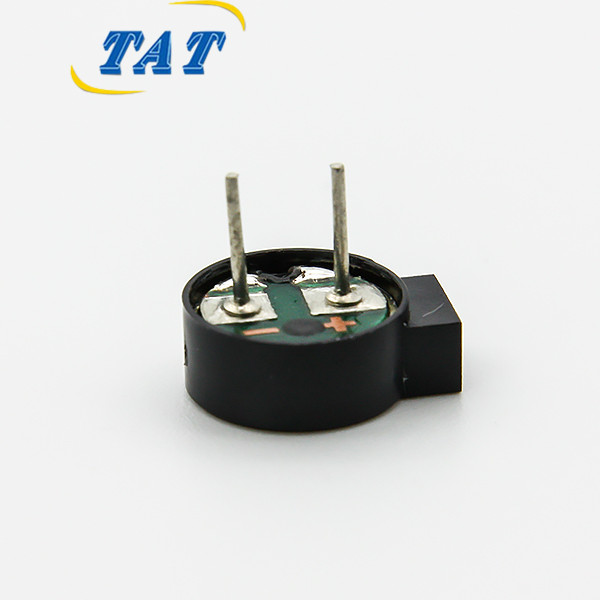
The BM9040E-0327-16 is a passive electromagnetic buzzer with a side sound port, 2700 Hz oscillation, 3.0 Vo-p rated voltage, a 2.0 to 4.0 Vo-p operating window, maximum 70 mA at rated voltage, minimum 85 dB at 10 cm, a 16 ±2 Ω coil, and an operating range of -30 to +105 °C with storage to the same upper limit. Its housing is black PPS, chosen for heat resistance, and the body measures 9.0 mm across by 4.0 mm high.
The BM8540S-0327-16 is the same family of device pushed in a different direction: an SMD passive magnetic buzzer at 2700 Hz, 3.6 Vo-p rated, 2.5 to 4.5 Vo-p operating, up to 100 mA, at least 92 dB at 10 cm through a 16 ±3 Ω coil, with an operating range of -40 to +105 °C and storage rated higher still. Its LCP housing is selected to survive reflow.
The comparison is instructive because neither part wins outright. The SMD part is around 7 dB louder and extends further into the cold, which matters for equipment that starts outdoors in winter. It also draws more current at a slightly higher rated voltage, and its SMD construction constrains how and where it can be mounted. The through-hole part is cheaper to assemble on a mixed board and easier to rework.
One caution applies to both quoted figures. A sound pressure number is only comparable if it came from a calibrated meter of the kind defined in IEC 61672-1:2013, the standard for sound level meters, at the stated distance and drive condition. Two suppliers quoting the same dB value are not necessarily describing the same measurement.
Notice what neither datasheet claims: that the part is automotive qualified. A wide temperature range is a necessary condition for many vehicle locations, never a sufficient one.
Current draw is where industrial and automotive budgets diverge most sharply, and it is not only about the battery.
A magnetic buzzer converts coil current into diaphragm motion, so its output is tied to how much current the drive stage can supply at the coldest temperature the product will see. Copper resistance rises as temperature falls, which reduces current for a fixed drive voltage and pulls output down exactly when a cold-start warning matters most. A part that meets its sound pressure figure on a bench at room temperature may not meet it in a cold chamber, and the datasheet figure will not warn you because it was measured under the stated test conditions only.
The BM9040E-0327-16 illustrates the arithmetic a designer has to do: 3.0 Vo-p across a 16 ±2 Ω coil implies a substantial pulse current, quoted at 70 mA maximum. The BM8540S-0327-16 goes further at 100 mA. Both are well above what a small microcontroller pin can source, so a transistor is mandatory, and the transistor's saturation voltage becomes part of the acoustic budget.
Piezo parts behave differently: they are capacitive, draw almost nothing in steady state, and their output tracks voltage amplitude rather than current. That is why piezo elements are popular in battery-powered instruments. It is also why a piezo part can be driven directly from a logic pin in low-volume designs, at the cost of needing a frequency the firmware must generate.
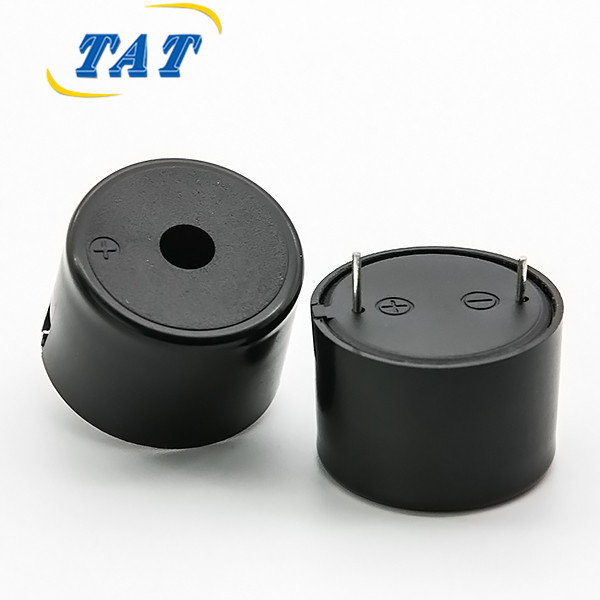
The BPC2316-2431 makes the industrial case from the opposite direction: an active piezo sounder rated 24 VDC across a 5 to 28 VDC window, minimum 95 dB at 24 VDC, 3100 ±500 Hz, maximum 30 mA, in a Ø23.3 × 16 mm black PPO housing. It is loud, tolerant of a badly regulated rail, and easy to drive from a DC supply with no firmware timer at all. Its operating range is -20 to +70 °C. Industrial does not mean wide temperature, and this is exactly the assumption that breaks programmes when a part is moved from a cabinet into a harsher location.
The paperwork is where the two markets feel most different to a purchasing team, and it is where most schedule surprises originate.
For an automotive programme, ask for the qualification report against the current revision of the applicable standard, the specific grade claimed, the construction and material list for the exact part number quoted, the process control plan for the line that will make it, and the change notification procedure. Ask also for the sample-to-production traceability story: which lot the samples came from, and whether production will come off the same line.
For an industrial programme, the equivalent list is shorter but not empty: the test report behind the datasheet numbers, the measurement conditions, and a written statement of what will be done if the construction changes.
The most expensive failure in a mature programme is not a part that fails a test. It is a part that quietly becomes a different part. A changed diaphragm material, a different housing resin, a new coil supplier or a shifted reflow profile can all move the acoustic output without changing the part number or the datasheet.
An automotive customer treats change notification as a contractual obligation with a defined approval path. An industrial customer usually gets it as a courtesy, if at all. If you are buying for a product with a long service life and a certification obligation, write the notification requirement into the purchase agreement regardless of which market you sit in. It costs nothing at the negotiation table and it is the cheapest insurance available.
Automotive qualification is not free, and the cost is amortised over volume. A part that carries a qualification programme, a controlled process and a notification obligation will price above an industrial part of similar acoustics. Benchmarking the two on unit price alone compares different products.
Second sourcing is the other asymmetry. In an industrial programme a second source is a supply continuity decision, and the replacement can usually be validated with a bench comparison of key parameters. In an automotive programme a second source is a qualification event in its own right. If your product needs a drop-in alternate, raise it during design rather than after qualification.
Does the temperature range cover both operating and storage conditions at the actual mounting location, not the average of the enclosure?
Is the quoted sound pressure level measured at your listening distance and your drive amplitude, or at a bench condition you will never reproduce?
Can your drive stage deliver the required current at the coldest temperature in the operating range, with margin for coil tolerance?
Is the tone frequency set by the part or by your firmware, and does the datasheet figure match the frequency you will actually generate?
What written commitment do you have that the construction will not change without notice?
A part that answers all five is a candidate. A part that answers three is a prototype decision, not a production one.
Automotive vs industrial buzzer selection is not a question about which part is better built. Both markets buy magnetic and piezo devices from the same families, often from the same lines. The difference is the acceptance system: automotive qualification against a defined stress regime with process evidence and change control, versus an industrial specification negotiated between buyer and supplier and verified by test report.
The practical reading order is always the same. Start with the temperature promise and separate operating from storage. Then check whether the acoustic figure was measured under conditions you can reproduce. Then confirm your drive stage can supply the current at the cold end. Then decide how much evidence you need, and write the change notification requirement into the agreement. Qualification tells you the part can survive the environment; only your own evaluation tells you whether it sounds right in it.
No. A wide operating range is one input to a qualification decision, not evidence of it. The BM9040E-0327-16 operates from -30 to +105 °C and the BM8540S-0327-16 from -40 to +105 °C, but a range on a datasheet is a performance claim, not a qualification certificate. Ask separately for the qualification report, the grade claimed and the revision of the standard it was assessed against.
Sometimes, and the decision belongs to your own validation rather than to the supplier. If the accessory is an aftermarket item outside the vehicle's safety systems, an industrial part may be entirely adequate. If the part sits inside a system that carries its own qualification obligation, the qualification travels with the component. Confirm which situation applies before you commit a part number.
Because you are buying more than acoustics. The price carries the qualification programme, the documented process control, the traceability and the change notification obligation. A 95 dB industrial sounder and a 95 dB automotive sounder are not competing products even when the housings look alike.


