
English 
Dedicated to global electroacoustic technology.
Views: 0 Author: Site Editor Publish Time: 2026-11-14 Origin: Site


Two electret condenser microphones can look identical on a drawing and behave nothing alike in a product. One picks up a room; the other picks up a mouth. One is quiet in a quiet room; the other is quiet in a loud one. Buyers usually discover the difference after the first prototype review, when the complaint is "the microphone is too noisy" and nobody can say whether the problem is the part, the port, or the firmware gain.
This article separates the two things that get confused in that conversation. Directivity is a property of the acoustic path. Noise cancelling is a property of how that path is fed. They are specified and paid for differently.
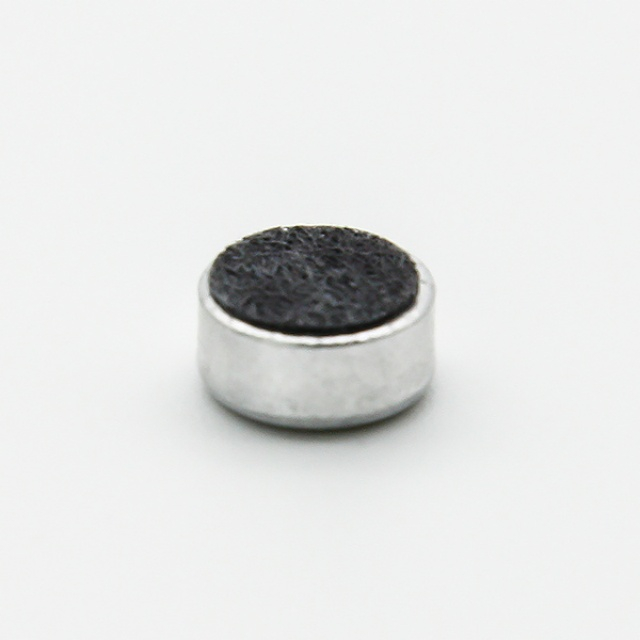
An omnidirectional ECM has one acoustic opening. Sound reaches the diaphragm from every direction with roughly equal pressure, so the output level stays close to constant as the source moves around the part. The datasheet field that describes this is Directivity, and on TAT's electret range it reads Omni-directional across the board, from the 4.0 x 1.5 mm capsule up to the 6.0 x 5.0 mm body.
A noise-cancelling ECM is a different arrangement of the same components. The capsule is given two acoustic inlets, one facing the intended source and one facing away, and the diaphragm responds to the pressure difference between them. A voice close to the front port arrives at the two inlets at very different times and amplitudes, so it survives the subtraction. A noise source at a distance arrives at both inlets almost equally, so it largely cancels. This is why the technique is tied to distance rather than to direction: it works because of the gradient across the capsule, not because the part is aimed anywhere in particular.
That distinction has a practical consequence at the purchasing stage. A part number can carry the words "noise cancelling" in its name while the Directivity field still reads Omni-directional, because those two statements are describing different things. The EM6050P-40dB is exactly that case: a 6.0 x 5.0 mm capsule listed as Omni-directional, with a sensitivity of -52 dB and a signal-to-noise ratio of 55 dB measured at 1 kHz with a sound pressure level of 1 Pa on the A curve. The name tells you what the acoustic housing is intended to do. The fields tell you what the part is. Read the fields.
Most "noisy microphone" complaints trace to one of three sources, and only one of them is addressed by a differential capsule.
The first is self-noise, the electrical floor of the capsule and its impedance converter. It is described by the signal-to-noise ratio, and it is what sets the quietest signal the part can resolve. The TAT-EM6027 is specified above 58 dB, and the smaller waterproof 4.0 x 1.5 mm unit above 56 dB. Three decibels of difference is audible as a change in hiss level in a silent room, and no amount of differential plumbing will recover it.
The second is radio-frequency interference. A microphone sitting next to a 2.4 GHz radio, a Wi-Fi antenna, or a switching regulator picks up energy on its own leads and on the high-impedance node inside the capsule, and that energy is demodulated into audible noise. The cure is shielding, which is a mechanical property of the can. TAT-EM6027 is built as a metal-shielded, anti-jamming part for precisely this reason, and the shield is why the part is offered in a 6.0 x 2.7 mm body rather than something smaller.
The third is ambient noise reaching the capsule at all. This is the only one a differential or noise-cancelling capsule addresses, and it only works when the wanted source is close and the unwanted source is not.
Putting the three capsules side by side shows how the trade-offs actually distribute. All figures below are quoted from the respective product pages.
The EM6050P-40dB is the largest of the three at 6.0 x 5.0 mm, with sensitivity of -52 dB and a maximum impedance of 2.2 kΩ. Its current consumption is given as a minimum of 50 μA, its operating voltage range as 4.5 V, and its signal-to-noise ratio as 55 dB at 1 kHz with 1 Pa on the A curve. The comparatively low sensitivity is the signature of a noise-cancelling acoustic design, and it is not a defect.
The TAT-EM6027 is a 6.0 x 2.7 mm shielded ECM. It runs from a standard 2 V supply at a maximum of 0.5 mA, presents an impedance below 2.2 kΩ, and is offered in three sensitivity grades: -46, -44 and -42 dB, each with a tolerance of plus or minus 3 dB at 1 kHz referenced to 0 dB = 1 V/Pa. Its signal-to-noise ratio is above 58 dB, and it is available with through-hole pins as the M6027P or with solder pads as the M6027A. A 33 pF capacitor and a circuit current of 400 μA maximum at a 3.0 V supply appear in its application data, which is the sort of detail worth checking before you copy a reference schematic from a different capsule.
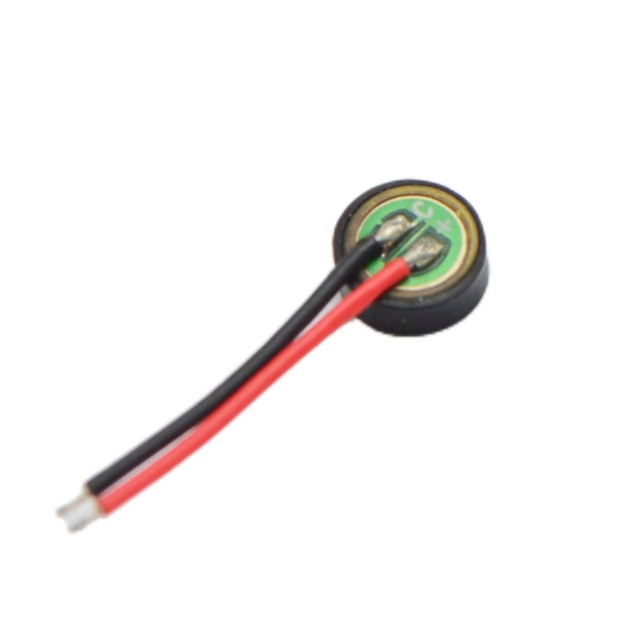
The TAT-EM4015 is the smallest at 4.0 x 1.5 mm and weighs no more than 0.2 g. It shares the 2 V, 0.5 mA, sub-2.2 kΩ profile and the same three sensitivity grades, with a signal-to-noise ratio above 56 dB. It is offered as an SMD pad version, a pin-hole version, a through-hole pin version, and a wire-lead version with red and black leads, which is the variant that carries the waterproof claim in its title.
Two numbers apply across the family. The first is the sensitivity reduction figure: within 3 dB at 1.5 V, which is the part telling you how much output you lose when the battery sags. The second is that all three grades of sensitivity exist on the same body, so the choice between them is about matching your amplifier gain, not about quality tiers.
None of the numbers above means anything without the conditions attached to them, and the datasheets are consistent about stating those conditions.
Sensitivity is quoted at 1 kHz with a reference of 0 dB = 1 V/Pa. Signal-to-noise ratio is quoted at the same frequency, and on the EM6050P the A-weighting curve is stated explicitly. A-weighting rolls off low frequencies, so an A-weighted figure and a linear figure on the same capsule will not agree, and comparing one supplier's A-weighted number with another's linear number is a reliable way to buy the wrong part.
The measurement chain matters too. Sound level meters are classified and verified against IEC 61672-1, and the standard governing microphone measurement methods, including impedance, sensitivity, directional response and external influences, is IEC 60268-4. Both are worth reading for orientation, and both should be checked for the current edition before you write a test procedure around them. A supplier's figure and your figure can differ by a couple of decibels without either being wrong, because the two labs weighted, averaged or positioned the source differently.
The single question that decides most of these projects is how far the user's mouth sits from the port.
Under roughly a hand's width, a differential or noise-cancelling capsule earns its cost. The voice arrives with enough level and enough gradient that subtraction removes a useful amount of room noise, and the low sensitivity of a part like the EM6050P-40dB is compensated by the short distance. That is the world of headsets, handsets and intercoms.
Beyond that distance, a differential capsule stops helping. The voice and the room arrive at nearly the same gradient, the subtraction removes both, and you are left with a quieter but not clearer signal. A high signal-to-noise omnidirectional part is the better answer here, because what limits performance is self-noise rather than ambient level. A voice assistant on a counter, a camera at the far side of a room, and a doorbell listening to a porch all belong in this group.
The middle case is the interesting one. A product with a fixed mouth distance in a noisy environment, such as a two-way radio or a conferencing pendant, wants an omnidirectional capsule with the best signal-to-noise ratio you can afford, plus a well-designed acoustic housing. The note that appears on TAT's ECM pages about using an acoustic housing or a sound-guide tube for noisy-environment collection is pointing at the same conclusion from the mechanical side: the port geometry is doing as much work as the capsule.
Three costs move when you change the part, and only one of them appears on the quotation.
The unit cost moves with the shield and the can size. A metal-shielded 6.0 x 2.7 mm part carries more material and more assembly steps than an unshielded 4.0 x 1.5 mm part, and the difference is real at volume. The engineering cost moves with the sensitivity grade: choosing -42 dB instead of -46 dB is free at the part level and can save a gain stage at the board level.
The third cost is the one that gets missed. A smaller capsule with a lower signal-to-noise ratio forces you to spend the difference on acoustic design or on firmware noise gating. Saving a few cents on the capsule and then spending weeks on a housing iteration is a common outcome, and paying for signal-to-noise ratio at the component level is usually the cheaper route.
The first mistake is reading the product name as a specification. A part described as noise cancelling is not automatically directional, and a part described as omnidirectional is not automatically unsuitable for a noisy product. Check the Directivity field and the sensitivity, and ask what the acoustic housing is designed to do.
The second is treating signal-to-noise ratio as a measure of noise cancellation. It is not. Signal-to-noise ratio describes the capsule's own electrical floor. Noise cancellation describes what the acoustic structure does to sound arriving from a distance. A part can be excellent at one and absent at the other, and the two figures are not interchangeable.
The third is ignoring the low-voltage behaviour. The sensitivity reduction figure of within 3 dB at 1.5 V tells you the part holds up as the supply falls, and that behaviour should be verified on your own board with your own bias resistor rather than assumed from the datasheet.
The fourth is choosing the sensitivity grade by habit. Three grades on the same body exist so that the capsule can be matched to the amplifier. Picking the loudest grade and then padding it down in firmware adds noise for no benefit, and picking the quietest grade with a low-gain front end leaves the analog-to-digital converter working near its floor. Measure the actual output at the intended mouth distance first, then pick the grade that puts the signal where the converter wants it.
The fifth is a layout mistake rather than a part mistake: routing the microphone leads alongside a switching regulator or an antenna feed. A shielded can helps, but it cannot fix a trace that runs under a radio. Keep the high-impedance node short and the ground return direct.
The choice between an omnidirectional and a noise-cancelling ECM is not a choice between a good part and a better one. It is a choice about which noise source you are fighting and how far away the voice is. Omnidirectional capsules with high signal-to-noise ratios win when the problem is self-noise and the source is distant. Differential capsules win when the problem is room noise and the mouth is close. Shielded cans win when the problem is a radio nearby.
Decide which of those three problems you actually have before you compare part numbers. Then read the fields rather than the names, and confirm the test conditions behind every figure you rely on. The electret microphone category lists the full range with size, sensitivity grade and termination options side by side.
Can a noise-cancelling ECM also be omnidirectional?
Yes, and the two descriptions refer to different properties. Directivity describes the shape of the pickup pattern, while the noise-cancelling label describes a two-port acoustic structure that subtracts distant sound. A capsule can carry both descriptions in its name, which is why the Directivity field on the datasheet should always be checked separately from the product title.
Is a higher signal-to-noise ratio always better?
Higher is better for resolving quiet signals, but it is not the only figure that matters. A part with a very high signal-to-noise ratio and a very small capsule can still be the wrong choice if the acoustic housing cannot deliver enough level to the diaphragm. Balance signal-to-noise ratio against sensitivity, size and the acoustic design together.
Why does the sensitivity of a noise-cancelling part look lower than a plain omnidirectional one?
Because the differential structure trades absolute output for rejection of distant sound. A figure around -52 dB is typical for that family, and it is compensated by placing the microphone close to the mouth.
What does the 3 dB reduction at 1.5 V actually mean for my design?
It means the capsule's output falls by no more than that amount when the supply drops to 1.5 V from its standard 2 V. It is a useful indicator of behaviour at end of battery life, but it should be confirmed on your own board, because the bias resistor and the load both affect the result.
Do I need a shielded capsule if my product has a radio?
If the microphone leads or the capsule sit near an antenna, a 2.4 GHz radio or a switching supply, a metal-shielded anti-jamming part removes a failure mode that is otherwise very hard to diagnose. Shielding does not replace good layout, so treat it as one layer of the fix rather than the whole fix.
Which termination should I choose?
Choose by assembly, not by acoustics. Through-hole pins suit hand soldering, solder pads suit automated SMT lines, and wire leads suit products where the microphone sits away from the board or must be sealed into a housing.


