
English 
Dedicated to global electroacoustic technology.
Views: 0 Author: Site Editor Publish Time: 2026-10-14 Origin: Site


If you are wondering whether a car speaker component can do double duty in a compact home theater system, the practical answer is: often yes for the driver itself — but only after you re-check impedance, power, and enclosure for the new job. The transducer does not know which room it is in; the amplifier and the enclosure do. This guide compares the two applications side by side and shows exactly which specifications transfer and which do not.
The Shared DNA: Both automotive and compact home theater speakers rely on high durability, compact form factors, and the ability to project clearly from shallow enclosures.
Impedance is the Deciding Factor: Car audio systems frequently rely on 4Ω (or lower) drivers to pull more current from a 12V supply. Home theater receivers are traditionally optimized for 8Ω. Mismatching these can trigger thermal protect circuits in home AV receivers.
Power Ratings Don't Transfer 1:1: A driver rated for 5W continuous in an open automotive dashboard may perform differently inside a sealed home theater satellite enclosure, where thermal dissipation is restricted.
Acoustic Targeting: Car components are often engineered to push through cabin noise (road/engine). In a quiet living room, distortion and high-frequency harshness become immediately noticeable.
The Bridge Is Narrow: This crossover holds for compact satellite and centre channels only. A 0.5 W-class micro driver belongs in a satellite or a prompt-tone circuit — never in a main channel, a floorstander, or any position needing high SPL.
The Crossover Protects the Driver, Not the Other Way Round: A 40 mm driver asked to reproduce 60 Hz will exceed its excursion limits. A high-pass filter around 120–150 Hz is what keeps a repurposed automotive driver alive in a living room.
At first glance, an automotive cabin and a living room have nothing in common. However, from a component engineering perspective, the requirements for a car dashboard speaker and a compact home theater satellite speaker are remarkably similar. Both applications demand transducers that deliver wide frequency response while occupying minimal physical depth.
When engineers design satellite speakers for a 5.1 or 7.1 surround sound system, they need compact drivers that can handle high dynamic peaks (like movie explosions or dialogue) without distortion. Automotive-grade components, which are already ruggedized for extreme temperature swings and vibration, naturally fit this requirement. The metal frames, Mylar or treated paper cones, and robust voice coils designed to survive a car door slam are exactly what make a small satellite speaker durable.
The bridge between automotive and home theater audio breaks down at the amplifier and the enclosure.
A car operates on a 12V DC electrical system. To get loud sound out of a low-voltage system, automotive amplifiers are designed to drive low-impedance loads (typically 4Ω, sometimes 2Ω) to draw maximum current. Home theater AV receivers, operating on high-voltage AC mains power, are traditionally engineered to drive 8Ω loads.
Furthermore, a car door acts as an "infinite baffle" (a massive, unsealed air volume behind the speaker). A home theater satellite speaker is usually a small, tightly sealed box. The same transducer will exhibit a completely different bass response and resonant frequency (Fo) depending on which enclosure it is mounted in.
When re-purposing a component, you must read the datasheet differently.
What transfers directly:
Physical Dimensions: The diameter and mounting depth remain constant.
Durability Specs: An operating temperature range of -20°C to +70°C guarantees survival in any living room.
Cone Material: Mylar or synthetic diaphragms will maintain their acoustic properties in both environments.
What changes in application:
Resonant Frequency (Fo): The datasheet Fo is measured in free air (without a baffle). The moment you install that driver into a sealed 0.5-liter home theater satellite box, the trapped air acts as a spring, raising the Fo significantly and cutting off low frequencies.
Power Handling: Thermal dissipation is harder in a sealed plastic home theater satellite than in an automotive dashboard.
The most critical engineering check when crossing over from automotive to home audio is impedance matching.
Many compact automotive drivers, such as the HOT-40mm metal-frame Mylar speaker published in our catalogue, are rated at 4Ω (with a 5.0W rated / 6.0W max input and an SPL of 89±3dB). In a car, this 4Ω load is perfect for extracting power from a 12V head unit.
However, if you connect a 4Ω satellite speaker to a standard home theater receiver rated only for 8Ω, the receiver will be forced to output double the current it was designed for. At high volumes (like during an action movie climax), this excess current generates massive heat in the amplifier, often triggering its thermal protection circuit and shutting down the audio. If you are using 4Ω automotive drivers in a home theater product, your system's built-in amplifier (or the recommended external receiver) must be explicitly designed to remain stable at 4Ω.
One boundary is worth stating plainly, because it is where this crossover most often goes wrong. A 0.5 W-class micro driver — the kind published at 12Ω with a 0.25 W nominal and 0.5 W maximum rating for prompt-tone duty — belongs in a satellite, a centre channel, or a prompt circuit, and nowhere near a main channel. The arithmetic alone rules it out: a main-channel position at cinematic levels asks for sustained power roughly an order of magnitude above that rating, and the excursion a full-range signal demands would destroy a 32 mm diaphragm long before any thermal limit was reached.
Table 1: Automotive vs. Home Theater Component Parameters Industry typical parameters; not mapping to specific TAT catalog items.
Parameter | Automotive-grade driver (typical) | Home-theater satellite (typical) | Bridge note |
|---|---|---|---|
Impedance | 4Ω (sometimes 2Ω) | 8Ω (standard) or 6Ω | Ensure home amp is 4Ω-stable if reusing car drivers. |
Enclosure Type | Infinite baffle (doors/dash) | Sealed or ported small box | Sealed boxes raise Fo; requires subwoofer integration. |
Typical Use | Wide dispersion in noisy cabin | Precise imaging in quiet room | Car drivers may need crossover tuning to tame harshness indoors. |
Vibration/Shock | High (road vibration, door slams) | Low (static placement) | Automotive ruggedness offers a longer lifespan indoors. |
Operating Temp | Extreme (-30°C to +80°C) | Controlled (15°C to 30°C) | Over-engineered for home use, ensuring high reliability. |
Table 2: Selection Weighting for the Same Component in Two Scenarios Industry typical parameters; not mapping to specific TAT catalog items.
Scenario | Impedance | Power | Size | Temp | Vibration | Cost |
|---|---|---|---|---|---|---|
In-vehicle | High (4Ω to match 12 V) | High | High (depth clearance) | High (-30°C to +85°C) | High | Medium |
Home-theater satellite | Medium (8Ω receiver standard) | Medium | High (WAF / placement) | Low | Low | Medium |
Reading the overlap | Where both are "High", one part can serve both roles | Automotive ratings are surplus to home needs | Shared constraint — the main reason this crossover works | Divergence: a home part would fail in a car | Divergence: automotive ruggedness is free insurance indoors | Shared — no cost penalty either way |
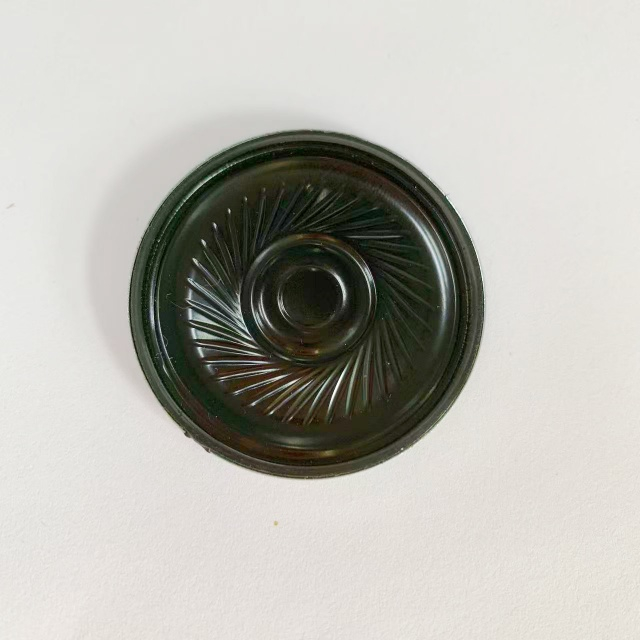
In a home theater system, the center channel handles up to 70% of the movie's audio (primarily dialogue). The left, right, and surround satellite speakers handle the rest.
If you build satellite speakers using efficient micro drivers (e.g., 89dB SPL), but pair them with a center channel using less efficient drivers (e.g., 82dB SPL), the soundstage will be completely unbalanced. The satellites will drown out the dialogue. When sourcing components, you must ensure the SPL sensitivity of the miniature speaker components used for the surrounds matches the center channel, or the system DSP must be capable of aggressive level attenuation.
Specification comparison and method illustration only; not a TAT product performance claim.
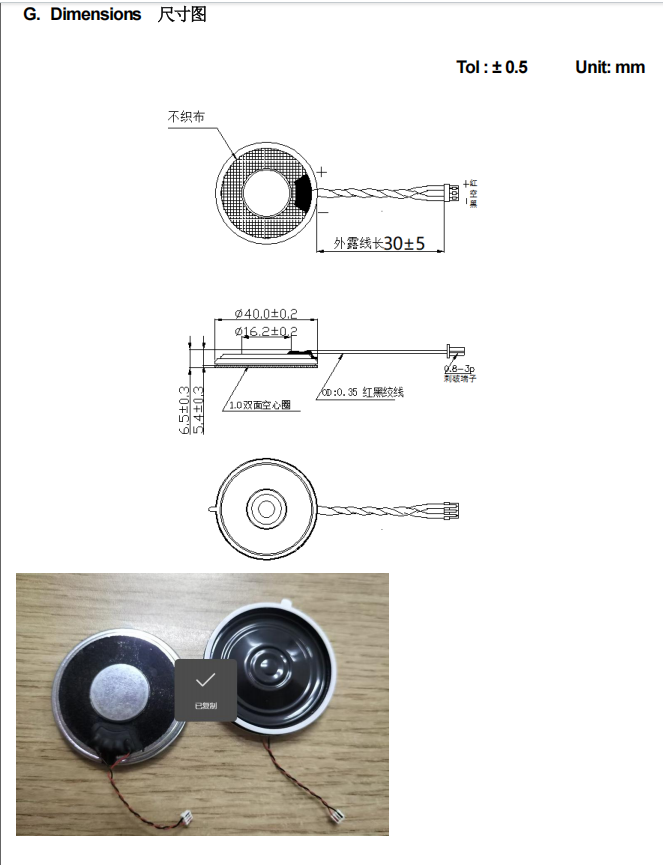
When a 40mm or 50mm driver is pushed to deliver cinematic volume in a living room, it is working near its mechanical limits. The primary cause of distortion in compact home theater speakers is asking the micro driver to play bass frequencies it wasn't designed for.
Because small drivers have a high resonant frequency (Fo) — for example, 190Hz in free air, which goes even higher in a sealed box — feeding them 60Hz explosion sounds causes massive, uncontrolled cone excursion. This creates severe intermodulation distortion, muddying the dialogue and midrange. The engineering solution is an aggressive high-pass crossover (e.g., crossing over at 120Hz or 150Hz) to block low frequencies from the satellite driver and route them entirely to a dedicated subwoofer.
Specification sheets in this category vary between revisions and grades. The three values you must have in writing before tooling — impedance, rated input power, and maximum power — are frequently the three that marketing copy simplifies. Ask for the controlled specification sheet for the exact grade you are buying, not the catalogue line.
Whether you are designing for automotive cabins or multi-media speaker components in a living room, working with an OEM that understands both environments is critical. TAT Electronics supplies 40mm 4Ω 5W metal-frame Mylar speakers alongside a deep portfolio of car audio mini box speakers (TATSP32A-001) for various automotive and consumer electronics applications.
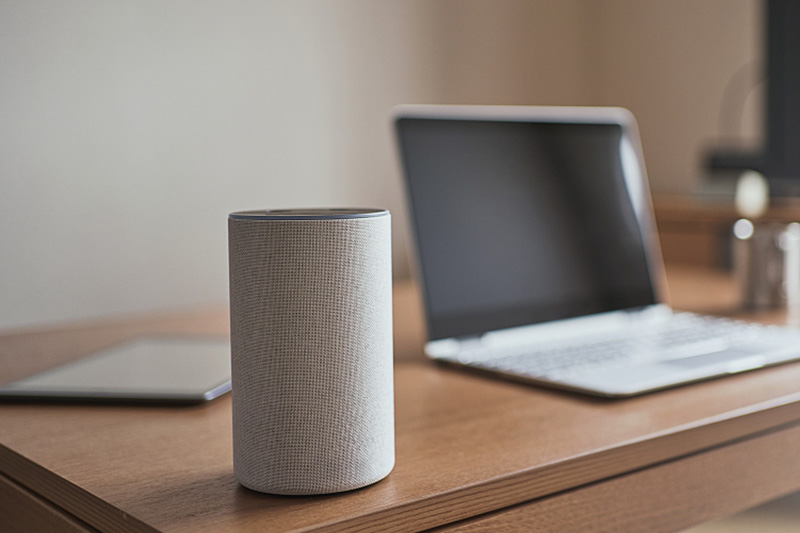
The overlap between a car speaker component and a home-theater satellite is real but narrow. It sits in the impedance range, the compact mounting envelope and the crossover point — not in the power class. A 0.5 W-class micro driver belongs in a satellite, a centre channel or a prompt circuit, and nowhere near a main channel, because the excursion and thermal headroom a main channel needs are simply not there.
Work the selection in the order that removes the most risk. Fix the impedance the amplifier will see, then the usable bandwidth above the crossover point, then the mounting depth and rear volume the cabinet allows. Weight the two scenarios separately instead of averaging them: vibration and service life for the vehicle, cabinet volume and damping for the satellite.
Before committing to a grade, confirm its published ratings in writing and test the driver inside the intended cabinet, with the intended crossover in place.
A: Yes, provided the home theater amplifier is rated to safely handle the lower impedance (often 4Ω) typical of automotive drivers. Their rugged construction and high power handling for their size make them excellent candidates for compact satellite enclosures.
A: Standard home theater receivers expect 8Ω loads. If your satellite speakers use 4Ω drivers, you must use an amplifier explicitly rated as "4-ohm stable." Power ratings (e.g., 5W to 10W for micro drivers) are sufficient for surround channels, provided low frequencies are aggressively crossed over to a subwoofer.
A: Because automotive-grade drivers are engineered to survive extreme temperature fluctuations (-20°C to +70°C), high humidity, and constant physical vibration, they typically outlast standard consumer-grade audio components when placed in the stable, climate-controlled environment of a living room.
A: Place the front left and right satellites at ear level, equidistant from the TV. Surround satellites should be placed just above ear level, slightly behind the main listening position. Ensure nothing blocks the direct line of sight from the speaker to the listener to maintain high-frequency clarity.
A: Always verify the factory amplifier's impedance requirement, the mounting depth available in your door or dash, and the driver's SPL sensitivity. Replacing a highly efficient factory speaker with a low-sensitivity aftermarket speaker can result in a significant drop in volume if the factory amplifier isn't upgraded as well.


