
English 
Dedicated to global electroacoustic technology.
Views: 0 Author: Site Editor Publish Time: 2026-11-23 Origin: Site


A handheld radio lives or dies on whether the voice coming out of it can still be understood in a noisy place. The TAT S40-0450 is a 40 mm full-range Mylar speaker on a metal frame, rated 5.0 W with a 6.0 W maximum, that fits a 20 mm mounting depth and holds its published sensitivity across the voice band. In this article, you will learn the five primary technical reasons why hardware designers select this specific model for handheld radio integration.
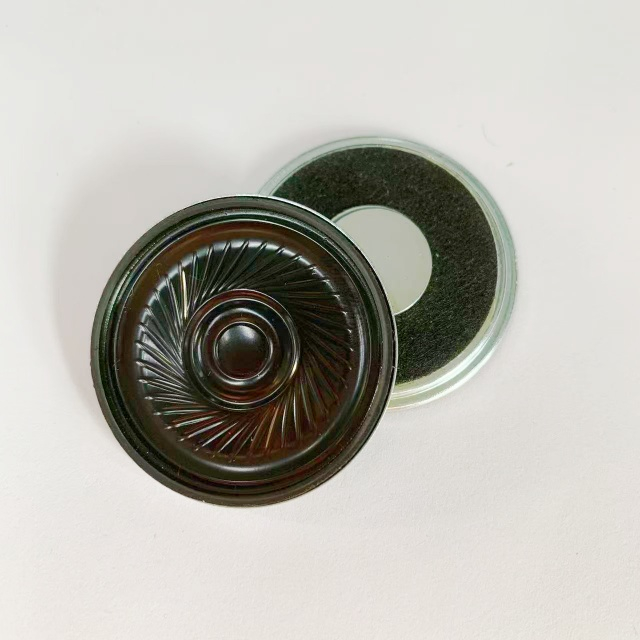
When you design handheld radios, you must ensure they remain reliable in high-noise environments like construction sites or emergency scenes. This requires integrated speakers that can deliver high volume without experiencing audio clipping or permanent physical damage. If the driver cannot handle sudden voltage spikes, the voice coil may overheat, leading to communication failure when clarity is needed most.
Your acoustic engineering team must also work within highly restricted internal spaces. Finding a transducer that balances a slim mounting depth with a powerful driver assembly is a constant challenge. If the magnet and voice coil are too small, the output will lack the necessary acoustic punch to cut through ambient noise.
Furthermore, handheld devices face constant exposure to dust, moisture, and extreme outdoor temperatures. Traditional paper-cone speakers easily absorb water and degrade, making them unsuitable for rugged field use. To overcome these environmental challenges, designers often look to Mylar diaphragms, which do not take up water the way paper cones do. Choosing a resilient 40mm Mylar speaker ensures the device maintains consistent sound quality under harsh conditions.
Selecting the right acoustic component is vital for the performance of your handheld radio design. The TAT S40-0450 offers a unique combination of high power, rugged construction, and clear audio output. The following five technical factors explain why the TAT S40-0450 is the preferred choice for radio hardware designers.
| Technical Parameter | Specification Value | Target Design Benefit |
|---|---|---|
| Power Capacity | 5.0 W Rated / 6.0 W Max | Prevents voice coil burnout at high volumes |
| Sensitivity | 89 ± 3 dB (at 0.1 W / 0.1 m) | Conserves battery life in handheld devices |
| Frame Construction | Metal Frame (Φ40 mm, 29 g) | Eliminates structural rattle and distortion |
| Thermal Tolerance | -20 °C to +70 °C | Ensures reliability in extreme field conditions |
| Audible Noise | Free of audible noise, 200 Hz – 4 kHz, up to 4.5 Vrms | No buzz or rattle inside the voice band |
When you deploy handheld radios in noisy industrial environments, standard 1W or 2W speakers often fail. The TAT S40-0450 40mm Mylar speaker addresses this challenge with a rated power of 5.0 W and a maximum handling capacity of 6.0 W. This high power threshold delivers the necessary acoustic power to cut through heavy ambient noise.
The high power threshold allows handheld radios to be used at high volume levels without risking voice coil burnout during extended transmissions. Standard micro speakers often fail when driven continuously by modern Class-D amplifiers. This model uses a robust voice coil assembly designed to dissipate heat rapidly during long broadcasts.
By integrating this high-power driver, you ensure that emergency alerts and critical voice instructions remain fully audible. Hardware designers can maximize output without adding bulky heat sinks. This simplifies your internal layout while maintaining superior acoustic performance under heavy duty cycles. If 5 W is more headroom than the design needs, the TATSP32A Mylar speaker covers the same voice-band job in a 32 mm body.
Battery life is a primary concern for any portable wireless device. The speaker features a sensitivity of 89 ± 3 dB at 0.1 W measured at 0.1 m, ensuring excellent electrical-to-acoustic energy conversion. It achieves this high efficiency by averaging its output across the key vocal frequencies of 0.8, 1.0, 1.2, and 1.5 kHz.
This high efficiency is critical for battery-powered handheld radios, as it maximizes audio output while conserving precious battery life. You do not need to draw excessive current from the battery pack to achieve a highly audible signal. This optimization directly extends the field operating hours of your portable communication hardware.
This energy-saving profile is achieved without sacrificing the standard 4 ohm impedance (measured at 2 kHz) or the 3.6 ohm DC resistance. As a result, the speaker pairs seamlessly with common low-voltage audio codecs. Your design gains maximum volume with minimal power draw.
Handheld devices frequently experience physical impacts, drops, and constant vibration in active work zones. The speaker is built on a rigid metal frame with a 38.5 mm mounting ring and four 3 mm mounting holes. This robust mechanical structure prevents physical deformation under structural stress and ensures a rattle-free, secure fit within the radio housing.
Unlike plastic baskets that can warp under clamping load, the metal frame holds its stamped dimensions. You can secure the 29 g assembly tightly against your enclosure without risk of cracking the frame. That matters when the housing wall is thin and the speaker is the part carrying the clamp load.
Additionally, the slim overall height of 20 mm allows for a compact integration within tight radio housings. Keeping the front clearance completely unobstructed ensures the diaphragm moves freely. Integrating a robust 40mm Mylar speaker prevents internal components from shifting and causing acoustic distortion over time. Where the mounting depth is tighter than 20 mm, the S3020 Mylar speaker was shaped around that compromise.
Emergency response and outdoor industrial work require hardware that operates reliably in all climates. Designed to withstand harsh environments, the speaker operates reliably in temperatures ranging from -20°C up to +70°C. It can also be stored safely in temperatures as low as -30°C and as high as +80°C.
This thermal range matches the ruggedized requirements of industrial, commercial, and emergency-service handheld transceivers. The Mylar diaphragm and the voice-coil assembly are specified to operate across that full −20 °C to +70 °C band. This ensures consistent acoustic performance whether your users are in sub-zero winter conditions or hot desert environments.
Traditional paper-cone speakers often absorb moisture in humid climates, which alters their weight and ruins their acoustic tuning. The non-porous Mylar material resists moisture absorption. This material choice guarantees that the speaker's resonant frequency remains stable regardless of weather shifts.
Clear voice transmission requires a speaker that does not introduce distracting mechanical buzzes or rattles. The speaker is verified to be free of audible noise from 200 Hz to 4 kHz at up to 4.5 Vrms. This rigorous factory sweep testing ensures that no unwanted vibration interferes with incoming audio signals.
This covers the critical frequency band for human speech, ensuring that voice communication remains perfectly clear and free of buzzing or distortion. With a low resonance frequency of 190 ± 20% Hz, the driver provides a warm, natural vocal tone. Your users will experience highly intelligible audio without clipping or harsh harmonic distortion.
Because the diaphragm stays pistonic through the voice band, the speaker preserves the natural character of the speaker's voice. This makes it easier for dispatchers and field workers to identify who is speaking instantly. Clear audio reduces the need for repeated transmissions, improving overall operational efficiency.
To successfully integrate the TAT S40-0450 into your handheld radio, you must understand its exact physical footprint and electrical tolerances. These parameters ensure your enclosure and amplifier are perfectly matched to the hardware.
| Parameter Category | Specification Metric | Value / Tolerance |
|---|---|---|
| Physical Dimensions | Body Diameter / Mounting | 40 ± 0.2 mm (38.5 mm ring) |
| Overall Height / Net Weight | 20 ± 0.5 mm / 29 ± 0.2 g | |
| Electrical Specs | Nominal Impedance / DC Resistance | 4 Ω ± 15% @ 2 kHz / 3.6 ± 15% Ω |
| Acoustic & Magnet | Resonance Frequency ($F_0$) / Range | 190 ± 20% Hz @ 1 V / $F_0$ to 20 kHz |
| Rear Magnet Cup Size | Φ23 × 7.5 ± 0.2 mm |
The compact body diameter of 40 ± 0.2 mm and overall height of 20 ± 0.5 mm allow this driver to fit into tight radio housings. Despite its low net weight of 29 ± 0.2 g, the rear magnet cup (measuring 23 mm in diameter by 7.5 ± 0.2 mm in height) provides the strong magnetic force needed for high-output environments.
Electrically, the driver features a nominal impedance of 4 ohm ± 15% at 2 kHz alongside a DC resistance of 3.6 ± 15% ohm. If your enclosure only allows an 18 mm aperture, the TATSP18A Mylar speaker is the smaller expression of the same moving-coil construction. This low resistance ensures efficient power transfer from standard radio amplifiers. The wide acoustic range starts at a resonance frequency ($F_0$) of 190 ± 20% Hz at 1 V without a baffle, extending up to 20 kHz, which preserves the consonant cues that carry intelligibility.
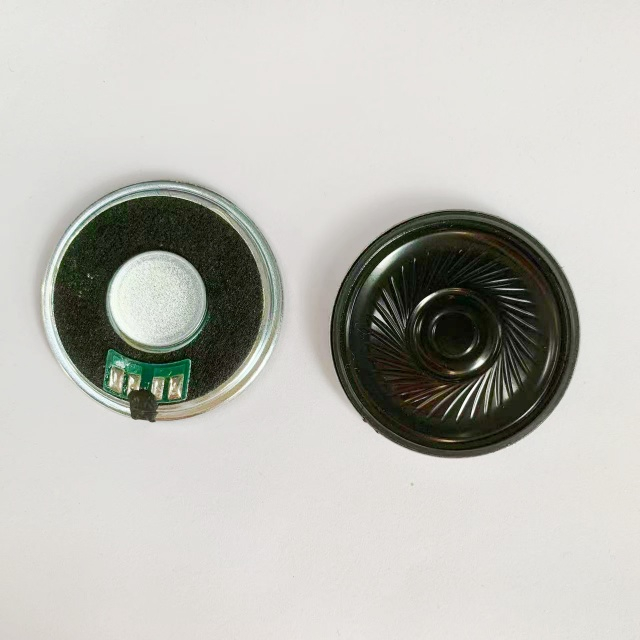
When you qualify a 40 mm Mylar speaker for a radio programme, four checks decide whether a batch is accepted. They map directly onto the parameters published for this part.
A batch that misses any of these boundaries should be rejected rather than re-graded. Run the acoustic checks in a quiet room free of strong reflections, or the sensitivity numbers will not repeat.
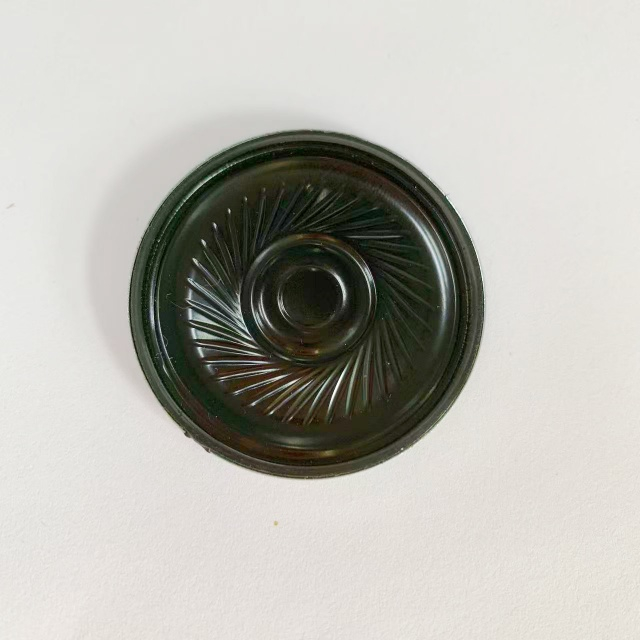
To integrate this hardware successfully, you must ensure your enclosure design maintains the recommended front clearance. The TAT S40-0450 40mm Mylar speaker combines high power handling, clear voice-range performance, and a rugged metal frame to meet the exact needs of handheld radios.
By maintaining strict batch tolerances and testing protocols, TAT ensures that each speaker unit performs reliably under extreme field conditions. For your next step, align your mounting templates with the four-hole ring to secure the assembly. Where the enclosure is larger than a handheld, the TAT-S57F2 Mylar speaker applies the same frame-and-diaphragm approach at 57 mm.
The metal frame provides superior mechanical rigidity and thermal dissipation compared to standard plastic alternatives. This rigid metal frame resists warping under high-stress conditions, which minimizes unwanted chassis vibration and distortion at high volumes. By utilizing this rugged metal structure, you ensure a cleaner midrange output and a significantly longer operational lifespan for your handheld communication equipment.
A low resonance frequency of 190 Hz allows the speaker to reproduce deeper, warmer vocal tones that typical small drivers cannot reach. By extending the lower frequency range, the speaker delivers natural human speech without the tinny, thin sound common in other compact designs. This ensures that critical emergency transmissions remain clear, highly intelligible, and easy to understand in loud environments.
Yes, this hardware is fully rated to operate reliably in extreme temperatures ranging from -20°C up to +70°C. Its Mylar diaphragm resists moisture uptake far better than a paper cone, which matters for equipment that spends its life outdoors. This wide thermal tolerance ensures that your handheld radios remain completely functional in both freezing winter environments and intense summer heat.
To prevent distortion, you must secure the speaker tightly to your housing using the four integrated 3 mm mounting holes. Additionally, you should maintain a clear front clearance zone with zero physical obstructions directly in front of the Mylar diaphragm. Following these 40mm Mylar speaker best practices prevents physical rattling and ensures undisturbed, high-fidelity sound projection from the enclosure.
High sensitivity ensures that the speaker converts precious electrical energy into acoustic volume with maximum efficiency. At an 89 dB rating, the driver produces loud, clear voice output while drawing minimal current from your portable system's amplifier. This highly efficient conversion directly conserves battery life, allowing your handheld radio units to operate for significantly longer periods in the field.


