
English 
Dedicated to global electroacoustic technology.
Views: 0 Author: Site Editor Publish Time: 2026-10-15 Origin: Site


Designing with an IP-rated speaker does not automatically make your product IP-rated. The rating belongs to the enclosure and the assembly, not to the driver alone — which is why a "waterproof" speaker can still be the reason a device fails in the field. This guide explains how to read the IP code, where real-world ingress beats lab testing, and how to integrate a driver so the finished device is actually protected.
The Driver is Only Half the Solution: A moisture-resistant driver survives humidity but cannot stop water entering the device. The mesh, the gaskets and the enclosure sealing do the actual work.
IP Ratings Are Not Additive: An IP67-rated driver inside a poorly sealed doorbell still yields an IPX0 system. Test the finished assembly.
Acoustic Trade-Offs: Sealing an enclosure against water also restricts air movement, damping SPL and shifting frequency response. Compensate with DSP.
Microphone Proximity Matters: Mount a high-SPL speaker too close to the microphone array and acoustic coupling ruins speech recognition.
Continuous Moisture Defeats Quick Splashes: A 10-minute splash test (IPX4) does not cover the 24/7 humidity of a bathroom. You need endurance data, not just a rating.
The "X" is Not a Failure: An "X" in an IP code means the device was not formally tested for that criterion — not that it offers zero protection against it.
When engineers design a smart outdoor doorbell or a bathroom voice panel, they often specify a "waterproof" driver and consider the problem solved. The weakest point in that acoustic chain is rarely the diaphragm.
Failures live in the structural integrations. Water seldom penetrates straight through a synthetic Mylar cone; it travels around the basket edge, seeps through an inadequate foam gasket, or follows capillary action along the voice coil lead wires onto your PCB. If the mounting surface is not flat, or the screw torque is not controlled at assembly, the seal is compromised before the product even ships.
The enclosure is the first line of defense. A driver is a moving piston designed to push air; it cannot double as a structural watertight plug while still delivering clean audio. The enclosure must therefore carry acoustic vents or hydrophobic meshes (PTFE, for example) that repel water droplets while letting sound through. The driver's role is narrower: survive the humidity and condensation that inevitably bypass those primary defenses.
The Ingress Protection (IP) code, defined by IEC 60529, classifies how well an enclosure resists the intrusion of solids and water. It has two digits. The first (0–6) rates protection against solid particles, from none to dust-tight; the second (0–8) rates protection against liquid ingress, from none to continuous immersion.
An "X" means there is no data to assign a rating for that criterion. IPX7, for instance, says the device resists short-term immersion and was not formally tested for dust ingress. It does not mean the device is vulnerable to dust: any enclosure sealed tightly enough to pass an IPX7 immersion test is inherently dust-tight.
Table 1: IP Code Interpretation Guide (Per IEC 60529) IP code explained per IEC 60529; no statement about any TAT product rating.
First Digit (Solids) | Protection Level | Second Digit (Water) | Protection Level |
|---|---|---|---|
0 | No protection | 0 | No protection |
1-4 | Large objects to wires >1mm | 1-3 | Dripping to spraying water |
5 | Dust protected | 4 | Splashing water from any direction (IPX4) |
6 | Dust tight | 5-6 | Low to high-pressure water jets |
X | Not tested | 7 | Short-term immersion (up to 1m for 30 min) |
- | - | 8 | Continuous immersion under specified pressure |
Critical Note: IPX4 ≠ IPX7 ≠ IPX8. These are distinct, non-transferable testing parameters. A device that passes IPX7 immersion might fail an IPX6 high-pressure water jet test.
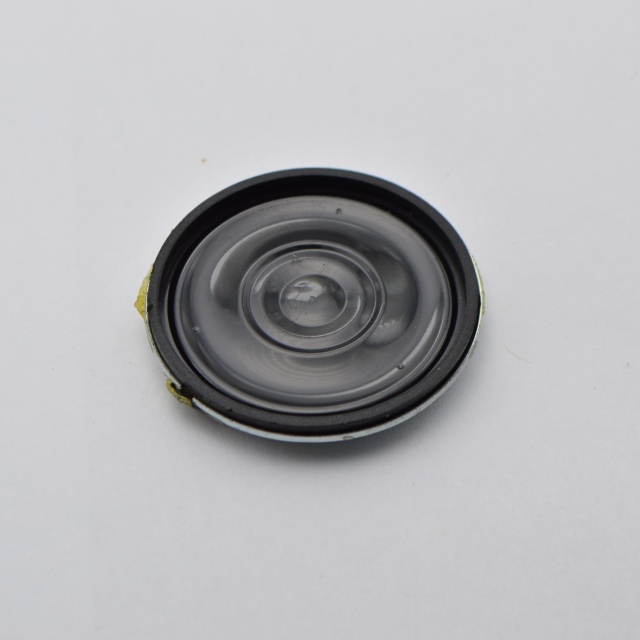
Lab tests are controlled events. An IPX7 test means submerging a static, room-temperature device in room-temperature water for exactly 30 minutes.
The field is more violent. Sun on a sealed outdoor unit expands the air inside it; a sudden cold downpour then cools the housing fast enough to create a temporary internal vacuum. That vacuum pulls water past gaskets and acoustic meshes in a way no static lab tank reproduces.
The intended use case dictates the material choices, and the three exposures are not interchangeable. Rain arrives with momentum and runs off; condensation forms slowly on every cold surface inside the housing and has nowhere to drain; cleaning agents arrive with surfactants that defeat a hydrophobic coating. A device specified for bathroom condensation therefore needs endurance data measured over months, while one specified for rain needs jet resistance and a defined drainage path. Specifying for the wrong one is how a product ends up protected against the wrong thing.
Table 2: Device Location & Targeted Protection Direction Industry typical parameters; not mapping to specific TAT catalog items.
Device Location | Typical Exposure | Targeted Protection Direction (Industry Practice) |
|---|---|---|
Bathroom Panel | 90%+ continuous humidity, steam | High-humidity endurance, splash resistance (IPX4) |
Outdoor Doorbell | Rain, thermal cycling, UV exposure | Jet resistance (IPX5), UV-stabilized plastics |
Kitchen Display | Splatters, aggressive cleaning agents | Splash resistance (IPX4), chemical-resistant grilles |
Industrial Control | Dust, high-pressure washdowns | Dust-tight, high-pressure jet resistance (IP66) |
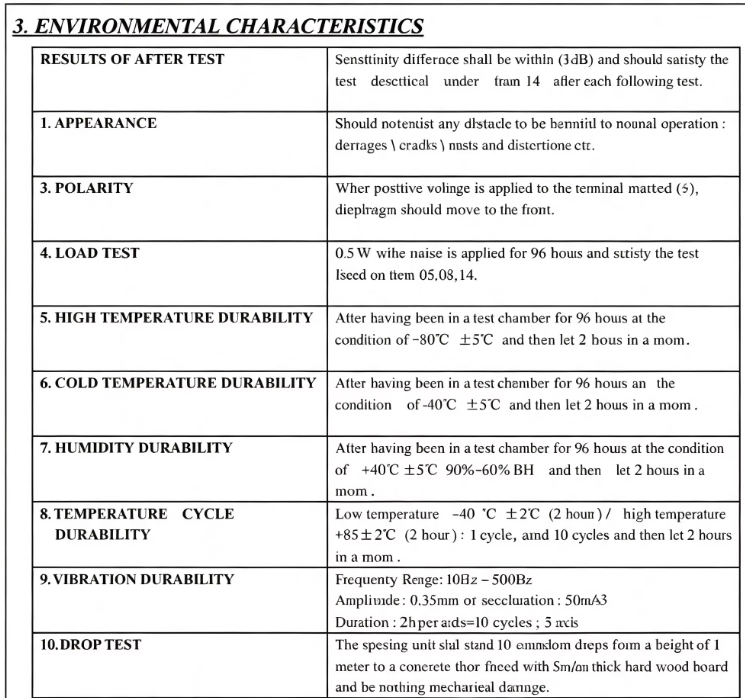
To survive high-humidity applications, rely on environmental endurance data rather than single-event IP tests. Published environmental characteristics for the TATSP18A-001 component, for example, document a 96-hour humidity soak at +40°C, thermal cycling between -40°C and +85°C, and vibration testing across a 10–500 Hz band. Continuous exposure of that kind punishes a diaphragm far harder than a 30-minute dunk.
You cannot seal a housing against water without also sealing it against air — and a speaker needs moving air to make sound.
A hydrophobic PTFE membrane over the grille introduces acoustic resistance. It behaves like a mechanical low-pass filter, attenuating the upper frequencies where speech consonants live and trimming overall SPL. The tighter the water seal, the more output you give up. How much depends on the membrane's surface area and your internal volume, so it has to be tuned on the finished assembly rather than predicted on paper.
The three structures below are not ranked by quality — they solve different problems, and the right choice depends on whether the unit must ever be serviced.
Table 3: Waterproofing Structure Approaches
Approach | How it Blocks Ingress | Effect on Acoustics | Serviceability |
|---|---|---|---|
Acoustic Vent/Membrane | PTFE mesh repels water droplets while allowing air passage. | Mild high-frequency attenuation; maintains SPL. | Easy to replace externally. |
Sealed Enclosure | Gaskets/O-rings isolate the internal chamber completely. | Raises resonant frequency (Fo); restricts bass. | Requires disassembly to repair. |
Potting/Encapsulation | Epoxies seal the PCB and driver rear completely. | None (if applied only to the rear basket/PCB). | Zero serviceability; permanent. |
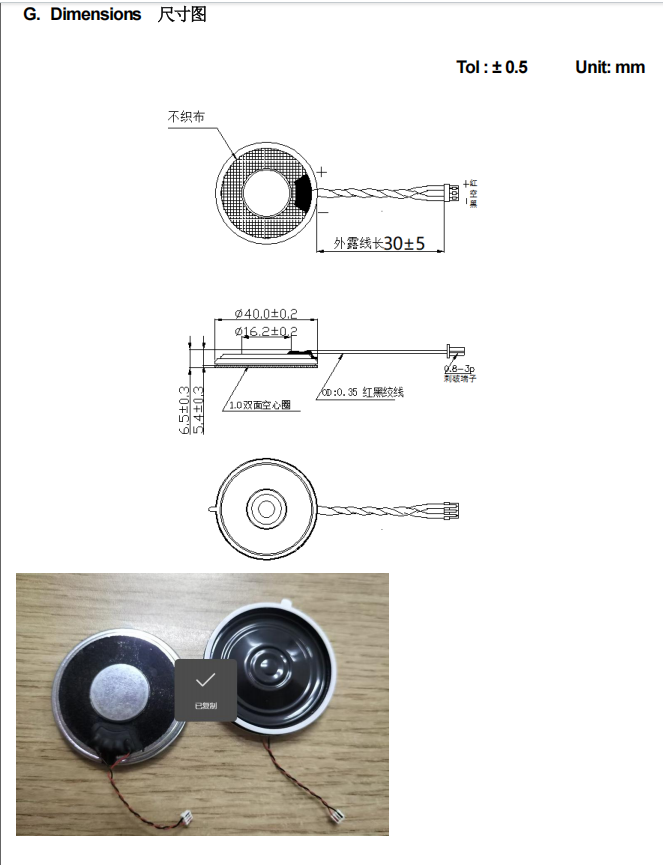
To support these structures, the component itself must offer flat, rigid mounting surfaces. The dimensional drawing for a standard 40 mm micro driver (the S40) shows the non-woven fabric grille and 1.0T double-sided foam gasket, illustrating how the component mates with the host enclosure.
A smart voice device (an AI assistant, say) listens while it speaks, which raises the problem of acoustic echo cancellation (AEC).
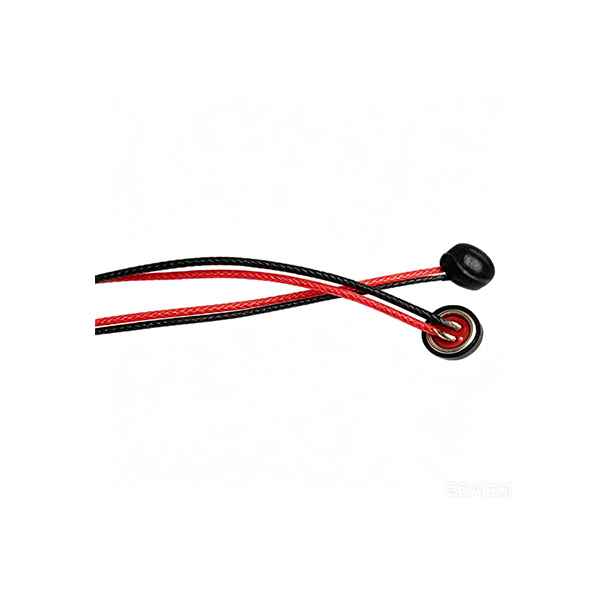
If the speaker components set up excessive mechanical vibration in the shared housing, that vibration reaches the onboard electret microphones for voice pickup, overwhelms the DSP, and stops the device hearing the user. A driver chosen for smart voice work must deliver intelligible mid-range output (500Hz to 4kHz) and also decouple itself from the housing through a rigidly damped basket.
The practical implication is spacing and decoupling. Keep the driver as far from the microphone port as the enclosure allows, mount it on a compliant gasket rather than directly to the shell, and avoid sharing a rigid internal wall between the two. In compact bathroom panels and doorbells, those three decisions usually matter more to recognition accuracy than the driver's own sensitivity figure.
Do not rely on a component's specification sheet to clear your product for an IP rating. Conduct air leak or vacuum decay testing on the finished device as it comes off the production line. If an automated pressure test shows a pressure drop within seconds, your gaskets are failing, whatever the quality of the driver inside.
In highly reverberant wet environments such as bathrooms, clarity is lost to echoing tile long before it is lost to volume. Optimize the DSP around the vocal band (roughly 1kHz to 3kHz) rather than pushing level, and specify Mylar speaker solutions that resist moisture absorption, so diaphragm mass — and therefore tuning — stays stable over years of steamy showers.
Specification sheets in this category vary between revisions and grades. The three values you must have in writing before tooling — impedance, rated input power, and maximum power — are frequently the three that marketing copy simplifies. Ask for the controlled specification sheet for the exact grade you are buying, not the catalogue line.
For smart voice devices, work with a supplier whose engineers can evaluate your splash-resistant structure. TAT Electronics supports OEMs with components including the ultra-thin Mylar speaker S36 and the ultra-thin Mylar speaker S3020, and can supply environmental test data for your integration review.
There is no such thing as a waterproof speaker that makes a product waterproof. Moisture resistance at component level comes from the diaphragm material and the sealed joints; ingress protection at product level comes from the enclosure, the gasket compression and the acoustic mesh across every aperture. Treating the two as a single purchasing decision is where designs most often fail.
Write the environmental requirement down before you shortlist parts. State whether the product must survive rain, condensation or cleaning, across which temperature range, and over how many cycles — then ask the supplier to document a humidity soak, thermal cycling and vibration testing against that requirement rather than a room-temperature inspection.
For the voice path, put the engineering effort into the acoustic opening and the microphone mounting. Keeping the diaphragm dry is only half of the problem; decoupling the microphone from the enclosure is the other half, and it decides whether the device remains intelligible in a wet or noisy space.
A: For heavy condensation and light splashes (bathroom panels), an enclosure designed to IPX4 practice is usually sufficient. For doorbells facing driving rain, IPX5 or IPX6 enclosure protection is the common target. These ratings apply to the finished housing, not to the bare driver.
A: Mylar (PET film) is the industry standard because it does not absorb water, so the diaphragm does not gain mass or shift its acoustic behaviour in high humidity. Unlike treated paper cones, it stays dimensionally and acoustically stable when wet.
A: Wipe the exterior grille with a soft damp cloth. Never use high-pressure air, a vacuum, or a direct water jet — pressure can rupture the hydrophobic mesh or force water past the internal O-rings and compromise the whole device.
A: Yes, but it needs tuning. The meshes that block water also attenuate high frequencies, which can muffle consonants. Compensate with DSP equalization across the affected voice band.
A: Yes. Our engineers can review your CAD enclosure design to see how your gasket, acoustic mesh, and mounting torque interact with our components, so the assembly is settled before you commit to tooling.


