
English 
Dedicated to global electroacoustic technology.
Views: 0 Author: Site Editor Publish Time: 2026-11-06 Origin: Site


Your industrial automation systems face heavy dust, moisture, and high ambient noise, where a single missed alert can lead to costly equipment damage or safety hazards. Standard signaling devices often fail prematurely under these harsh conditions, leaving your facility vulnerable to operational risks.
To solve this, the TAT BPC43M-1228-SP waterproof active piezo buzzer delivers a rugged signaling solution with its 100dB sound pressure level, 6–28VDC operating range, and epoxy-sealed waterproofing. This guide identifies exactly where and why to deploy this component across seven key industrial automation applications.
In this article, you will learn how this buzzer integrates into standard 12V and 24V power grids. You will also discover the mechanical and acoustic advantages of its 2800Hz continuous tone in safeguarding your factory floor.
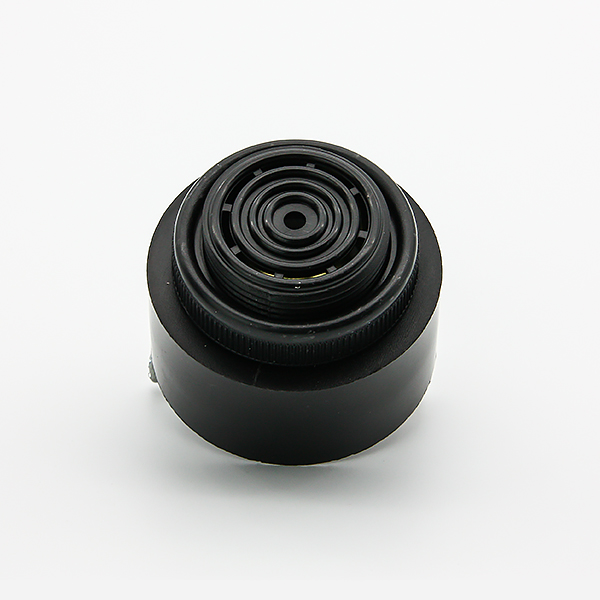
In industrial safety, your audible alerts must deliver immediate, highly penetrating sound to guarantee rapid operator response during emergencies. This section explores how the acoustic profile of this buzzer serves critical safety infrastructure, specifically in security and fire protection systems.
In commercial and industrial security layouts, your alarm systems must deliver immediate, unmistakable alerts during a breach. The TAT BPC43M-1228-SP waterproof active piezo buzzer excels in these high-stakes environments.
Its 2800±500Hz continuous warning tone, easily identified by the laser-marked 'L' on the housing, is specifically engineered to cut through typical factory background noise. This penetrating frequency ensures security personnel instantly detect unauthorized access, even in loud manufacturing zones.
Furthermore, because this device features a built-in oscillation circuit, it triggers the moment it receives a direct DC voltage. Eliminating the need for external driver components significantly reduces system latency. This instant response ensures your critical security loops react without delay, protecting your facility when every second counts.
For fire and life-safety systems in large facilities, you must ensure evacuation signals remain highly audible. This component meets the demand by delivering a maximum sound output of 100dB at 10cm, with a guaranteed minimum of 95dB at 12VDC. This high-volume output provides clear, penetrating alerts that cut through ambient noise to guide personnel safely during emergencies.
Furthermore, the RoHS-compliant design and self-contained active circuitry ensure long-term reliability in critical life-safety systems. Because it operates without complex external drivers, you avoid ongoing driver maintenance and reduce potential failure points in your emergency loops.
Mobile industrial machinery operates under constant physical shock, vibration, and exposure to the elements, demanding highly ruggedized audible alarms. You can reliably integrate this signaling hardware into heavy construction equipment and warehouse material handling vehicles to maintain consistent alert performance.
On heavy construction equipment like excavators, cranes, and loaders, intense mechanical vibrations can quickly destroy standard signaling devices. The TAT BPC43M-1228-SP waterproof active piezo buzzer handles these harsh environments through its rugged black ABS housing. This outer shell provides excellent impact resistance, shielding the delicate internal piezoelectric ceramic disc from constant physical shocks.
To prevent the alarm from shaking loose, you can utilize dual mounting options. The integrated M27 external thread allows for secure panel mounting, while the M3 screw fixing holes provide additional physical reinforcement. This dual-securing design ensures the signaling hardware remains firmly in place despite severe mechanical stress on the job site.
In busy, blind-spot-prone warehouse environments, you must ensure pedestrians and operators are instantly alerted when mobile equipment reverses. The TAT BPC43M-1228-SP addresses this safety need by emitting a continuous 2800Hz tone. This frequency serves as an unmistakable localized warning, allowing nearby personnel to quickly identify the direction of the reversing vehicle.
Additionally, you do not have to worry about draining vehicle batteries during prolonged reverse-gear operations. Operating at a maximum current of just 30mA at 12VDC, this active buzzer places a minimal electrical load on your equipment's power system. This low draw ensures long-term reliability without compromising on acoustic performance.
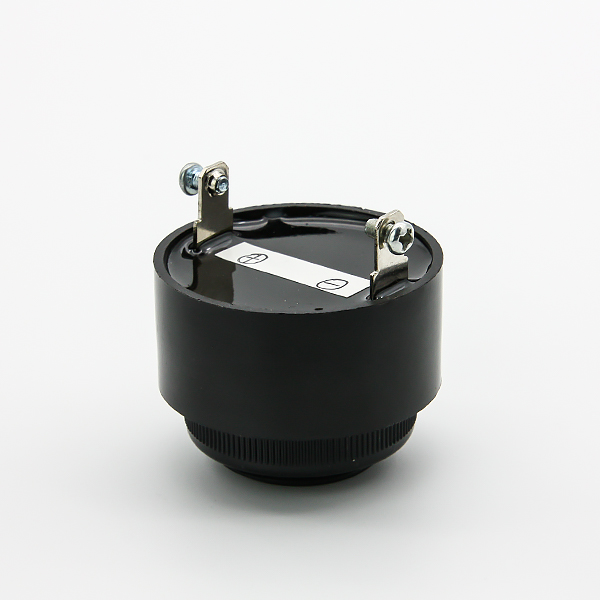
Moisture ingress is a leading cause of premature failure in standard industrial buzzers. When water or high humidity penetrates an unsealed housing, it quickly causes internal corrosion and acoustic dampening, which muffles the alarm tone. To prevent these failures, the TAT BPC43M-1228-SP utilizes specialized epoxy resin potting to seal its internal components completely. This robust barrier prevents water droplets, heavy condensation, and dust from reaching the sensitive piezoelectric element. When you compare sealed housings from different suppliers, ask for evidence framed against the ingress-protection definitions in IEC 60529 rather than accepting a marketing label at face value.
By choosing a sealed active buzzer, you ensure that your critical alerts remain loud and clear even in wet processing zones or exposed outdoor installations. This specialized sealing enables reliable, long-term operation across two primary demanding areas: remote outdoor monitoring setups and automated fluid handling systems. In the following subsections, you will see exactly how this protective design performs under continuous exposure to the elements and liquid spray.
When you deploy outdoor monitoring equipment or weather-exposed surveillance stations, rain, heavy condensation, and high humidity can easily degrade standard audible alarm components. The TAT BPC43M-1228-SP prevents these failures through its advanced epoxy resin potting. This specialized material completely seals the internal components, creating an impermeable barrier that shields the delicate piezo element from environmental moisture.
Additionally, the device is highly compatible with remote, solar-powered environmental monitoring setups. Since it operates with a low power consumption of only 30mA at 12VDC, it places minimal electrical load on your battery-backed systems. You can ensure reliable audible alerts without draining critical solar reserves.
In automated pump stations and backup generators, your equipment frequently faces water spray, heavy washdowns, or high-temperature steam. Under these harsh conditions, the epoxy-sealed barrier of the TAT BPC43M-1228-SP waterproof active piezo buzzer prevents moisture from dampening the internal piezo element, holding the acoustic output at its rated 95dB minimum and 100dB typical at 10cm.
To protect your electrical connections, you must isolate the wiring from these wet processing zones. The manufacturer provides customizable cable lengths and specialized connectors for bulk orders. This flexibility allows your engineering team to route wiring safely away from liquid hazards to dry terminal areas, ensuring long-term system reliability.
Control cabinets serve as the central brains of your automated production lines. Because these enclosures manage complex operations, they require clear, highly visible, and audible indicator alarms that seamlessly fit into standard layouts and electrical grids.
Integrating a waterproof piezo buzzer into these crowded enclosures ensures that operators receive immediate acoustic feedback when faults or cycle changes occur. This section explains how this specialized signaling device achieves mechanical mounting compatibility and electrical harmony within standard industrial control enclosures.
In the following subsections, you will explore how the physical design simplifies front-panel installation and how its wide operating voltage matches existing industrial power grids without requiring extra power conversion components.
To signal system faults or cycle completions, you can easily integrate this waterproof piezo buzzer into your control panels. The unit features a 43mm outer diameter and an M27 thread, allowing for straightforward front-panel installation. This thread secures the housing tightly against the cabinet face to prevent loosening from industrial vibrations.
For physical wiring, the buzzer simplifies your assembly process. It features pin terminals marked clearly as P2 (+) and P1 (-). This clear polarity marking reduces wiring errors on high-volume cabinet production lines, saving valuable labor time. When you place the audible alarm beside visual panel indicators, align both with the coding conventions in IEC 60073 so an operator can separate a fault from a normal cycle at a glance.
You can power the buzzer directly from standard 12VDC and 24VDC industrial control buses. With a wide operating range of 6VDC to 28VDC, the device runs smoothly on common factory power grids without requiring extra voltage step-down components.
Additionally, its active design eliminates the need for external AC signal generators or pulse-width modulation (PWM) controllers. By triggering the alarm with a basic DC signal, you save valuable programmable logic controller (PLC) output points and simplify your ladder logic programming. This straightforward electrical integration reduces system complexity and installation costs across your control cabinet layouts.
The TAT BPC43M-1228-SP waterproof active piezo buzzer provides an optimal combination of 100dB acoustic output, rugged epoxy sealing, and wide 6–28VDC compatibility. By mapping this component to your safety systems, heavy machinery, wet environments, and control panels, you can design more reliable, simplified signaling layouts. Ultimately, utilizing active piezo technology reduces your overall system complexity, power consumption, and maintenance overhead in modern industrial automation.
It is active. You only need to apply direct DC voltage to trigger the warning tone.
It indicates continuous tone. The unit will beep constantly once you power it.
Yes, it is. The epoxy resin potting completely seals the internal piezo element against moisture.
It operates from 6VDC to 28VDC. This allows direct integration into 12V and 24V grids.
No, it does not. The built-in oscillation circuit allows simplified plug-and-play installation.


