
English 
Dedicated to global electroacoustic technology.


| Quantity: | |
|---|---|
The BMC1295 electromagnetic buzzer is a precision-engineered electro-acoustic component designed to generate clear, penetrating sound through the controlled interaction of a magnetic field and a vibrating metallic diaphragm. When a direct current passes through the internal copper coil, it induces a rapid magnetic force that drives the diaphragm to oscillate, producing a sharp and highly audible tone. This specific mechanism ensures that the acoustic output remains steady, avoiding the pitch fluctuations commonly found in lesser audio components.
Recognized for its stable sound output, straightforward driving circuit requirements, and dependable performance even at low voltages, this buzzer serves as an essential acoustic indicator. With its moderate power consumption and distinctly clear tone quality, it provides an unmistakable auditory cue. The component features a compact, tactile housing that integrates smoothly into densely packed circuit boards, making it a preferred choice for alarms, household appliances, demanding industrial equipment, and various electronic devices requiring immediate notifications, hazard warnings, and operational status indications.
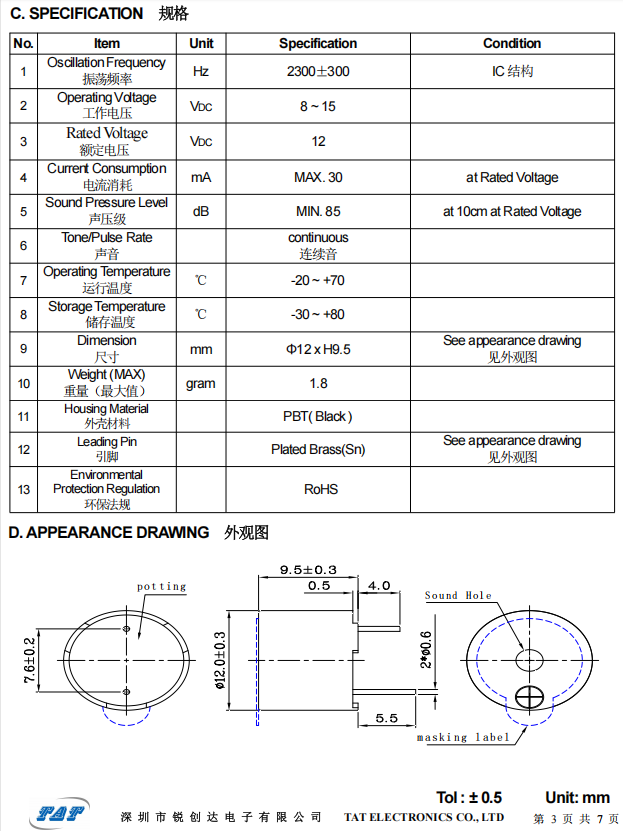
Electromagnetic buzzers deliver an exceptionally stable sound profile owing to their finely tuned coil-driven diaphragm architecture. The operating frequency is strictly controlled within a narrow ±2–3% tolerance, ensuring that the emitted tone remains consistent and easily recognizable across hundreds of activation cycles. Capable of generating sound pressure levels reaching 85–95dB at a distance of 10cm, the component produces a robust audio alert that cuts through ambient room noise effectively. To guarantee this level of reliability, every unit undergoes fully automated acoustic detection and rigorous aging tests before leaving the facility, ensuring zero-defect consistency in both sound pressure and frequency across every production batch.
Designed for straightforward implementation, these buzzers operate directly on DC voltage, eliminating the need for complex, space-consuming external oscillation circuits. They function reliably within typical operating voltages ranging from 1.5V to 12V, offering broad compatibility with diverse electronic architectures. Beyond electrical simplicity, the physical integration is optimized for modern manufacturing. Available in standard Tape & Reel packaging with multiple pin and surface-mount (SMD) configurations, the component is fully compatible with automated SMT placement and wave soldering processes. This assembly-friendly design significantly reduces manual labor, minimizes production bottlenecks, and lowers overall manufacturing costs.
The BMC1295 strikes an optimal balance between energy efficiency and acoustic performance. Typically consuming just 20–50mA during active operation, it delivers a strong, piercing tone without draining system power reserves. This energy-to-sound ratio makes it highly suitable for both battery-operated portable devices and fixed installations where clear auditory alerts are mandatory, yet power budgets are constrained. The efficient energy conversion ensures dependable, long-lasting performance across various operating conditions, preventing excessive heat generation while maintaining a loud, attention-grabbing acoustic signal.
Engineered to perform in diverse environments, this buzzer exhibits excellent environmental adaptability, functioning reliably across a wide temperature range from -40℃ to +85℃. Its superior resistance to damp and hot conditions ensures stable sound generation even in harsh industrial or semi-outdoor settings. Furthermore, the component offers extensive customization capabilities. Manufacturers can request specific resonant frequencies (typically between 2–4kHz), precise sound pressure level adjustments, and tailored housing dimensions. Supported by a dedicated engineering team, buyers receive rapid prototyping, fast sample delivery, and expert selection guidance to match the exact acoustic requirements of their end products.
Parameter | Specification Value |
|---|---|
Operating Voltage | 1.5V to 12V DC |
Rated Current | 20–50mA |
Sound Pressure Level (SPL) | 85–95dB at 10cm |
Operating Frequency | 2–4kHz |
Frequency Tolerance | ±2–3% |
Operating Temperature | -40℃ to +85℃ |
Fire & Intrusion Panels: Electromagnetic buzzers are heavily utilized in safety devices, projecting clear, continuous sound signals to notify occupants of emergencies.
Acoustic Penetration: The strong 85–95dB sound output guarantees that the warning tone remains highly audible, even in semi-industrial environments with heavy background noise.
Daily Interaction: Integrated into microwave ovens, washing machines, and induction cookers to provide distinct operation reminders and cycle-completion alerts.
User Experience: The consistent tone helps users immediately identify status changes or operational errors, enhancing the practical usability of everyday household machinery.
Control Systems: Embedded within factory automation panels and heavy machinery as reliable auditory indicators for system faults or process warnings.
Rugged Durability: Capable of withstanding extreme temperature fluctuations (-40℃ to +85℃), ensuring continuous, uninterrupted operation in demanding factory settings.
Compact Gadgets: Frequently found in timers, electronic toys, and communication devices where internal space is at a premium.
Cost-Efficiency: The simple driving method and stable acoustic generation make it an economically viable component for mass-produced consumer goods requiring button-press feedback.
Entry Verification: Employed in door entry keypads and security panels to generate immediate confirmation beeps upon successful code entry or card scans.
Deterrence & Safety: Emits sharp warning sounds during unauthorized access attempts, improving physical security interaction and situational awareness.
When integrating an electromagnetic buzzer into your hardware design, a systematic approach ensures optimal acoustic performance and longevity. First, verify the rated voltage (1.5V to 12V) and current consumption (20–50mA) to confirm absolute compatibility with your specific power circuit design. Next, evaluate the required sound pressure level; the standard 85–95dB output is generally sufficient for most indoor and semi-outdoor environments, but placement within the device housing can affect final audibility.
It is also crucial to check the frequency stability (commonly 2–4kHz) to ensure the tone aligns with your intended user experience. Confirm that the physical dimensions and mounting type—whether surface-mount (SMD) or through-hole—match your PCB layout and automated assembly capabilities. Finally, review the component's compliance documentation. This product fully meets international environmental and safety standards, including RoHS and REACH, ensuring that your final assembled devices can be exported to global markets without facing regulatory compliance hurdles.
Consistent component availability is just as critical as technical performance. Production of the BMC1295 is backed by highly automated, large-scale manufacturing facilities designed to handle substantial volume requirements with precision. By relying on automated assembly lines and strict process controls, the production ecosystem guarantees stable supply and rapid lead times, even for extensive orders. This robust manufacturing capacity effectively mitigates supply chain risks, ensuring that production lines remain operational and product rollouts proceed exactly on schedule.


